How Do You Maximize Living Space When Building on a Small or Narrow Block
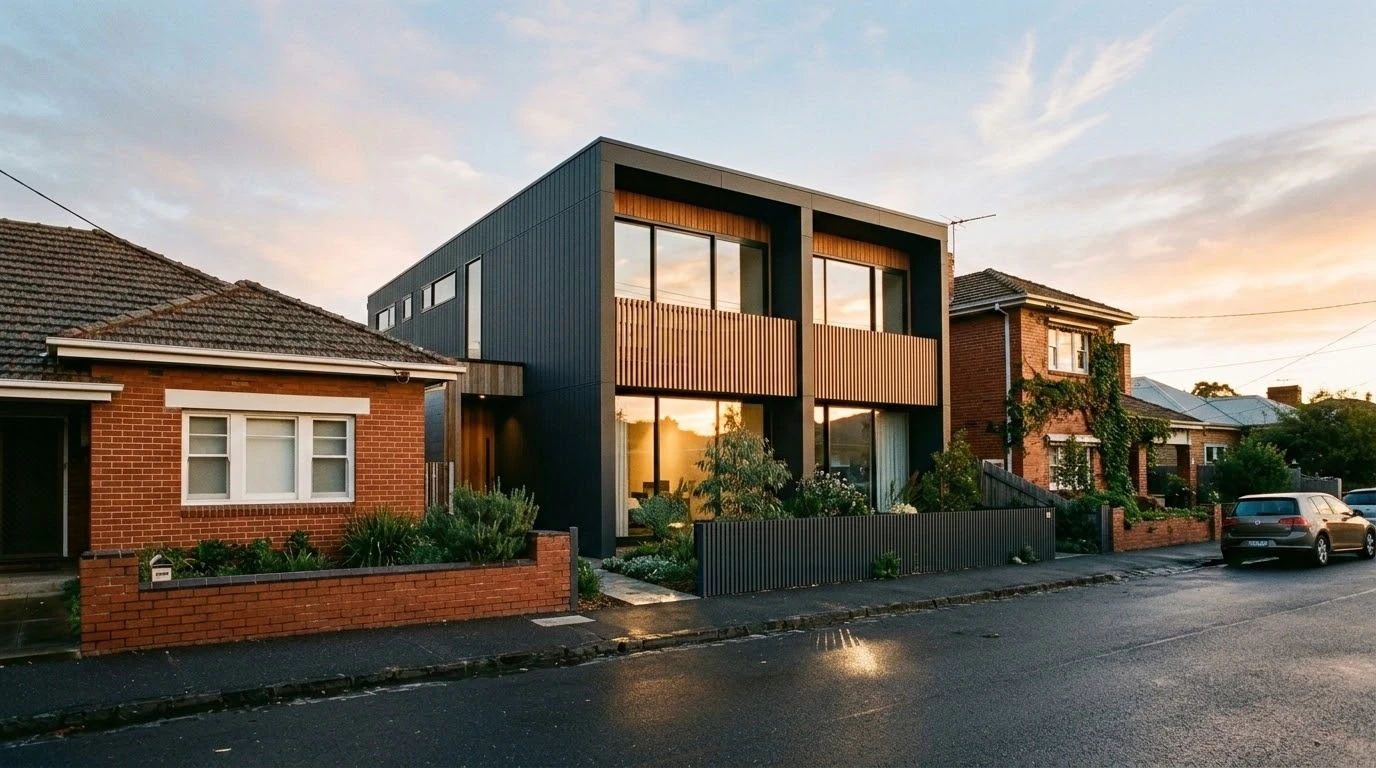
Building on a tight suburban block is the reality for most people buying near major city centres today. You buy the location, but you sacrifice the dirt.
The challenge is getting a comfortable house on a block that might only be six to ten metres wide without feeling like you live in a hallway. It takes strict planning and a refusal to waste a single square metre. You have to work within tight boundary limits, strict council overlooking rules, and difficult site access. The end result completely depends on how well you manage the space you have.
Get the Floorplan Right from Day One
Drafting floorplans for a narrow site leaves zero room for error. Every single wall has to justify its existence. Traditional houses rely on long central corridors to connect rooms, which is a massive waste of usable area. You need to strip those out entirely where possible. Open plan living works best when zones are defined by furniture placement or ceiling bulkheads rather than physical walls.
Finding a reliable new home builder is step one, but they must have a proven track record of delivering on narrow sites. Some volume companies simply take a standard design and compress it to fit a small block. The result is usually dark, cramped, and awkward to navigate.
Walkways need to be incorporated into the living areas so you are not losing 15 percent of your total footprint just to foot traffic. If you can position the front door on the side of the house instead of the very front, you eliminate the need for a long entry hallway altogether.
Think Vertically Not Just Horizontally
When you cannot build out, you have to build up. Vertical space is not just about adding a second storey to the property. It is about ceiling height and using the full volume of the rooms.
A standard 2.4-metre ceiling on a narrow block makes the internal space feel restrictive. Pushing your ground floor ceilings to 2.7 or 3 metres instantly changes how the room is perceived. The space feels breathable even if the actual floor footprint is small.
You can also use the vertical plane for highly functional elements:
- Run cabinetry right up to the ceiling in the kitchen to free up floor space.
- Use the structural cavities between wall studs for recessed shelving in bathrooms. Stealing back 100 millimetres of depth inside a wall makes a noticeable difference in a small ensuite.
- Include raked ceilings in upstairs bedrooms to trick the eye into thinking the room is significantly larger.
Push the Boundaries of Natural Light
Light makes a small space feel twice its size. The primary issue with narrow blocks is you usually have neighbours sitting right on your boundary line. Side windows often just look at a timber fence or a solid brick wall, blocking out the sun.
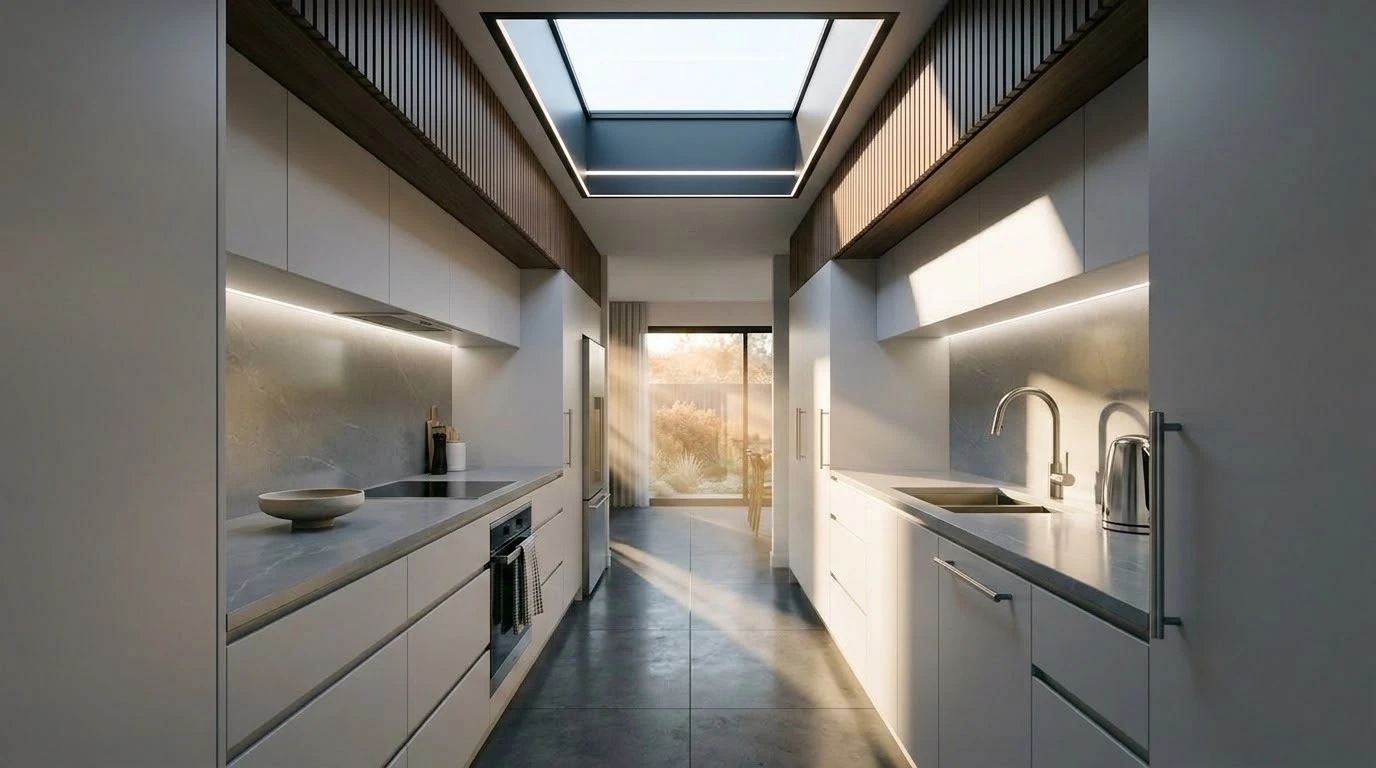
This is where skylights and highlight windows become your most valuable tools. Dropping light down from the roof completely changes the mood of a central living area that would otherwise remain in permanent shadow.
Strategic placement of windows at the end of sightlines also draws the eye outward. If your front door opens to a clear line of sight all the way through the house to a bright rear window, the house immediately feels expansive. To navigate council overlooking regulations on a second storey, use frosted glass on lower window panes while leaving the top clear. This allows light to flood in without violating privacy rules.
Blur the Line Between Inside and Out
Australians expect an outdoor lifestyle regardless of how small the property is. The trick is making your rear courtyard feel like a direct continuation of your living room.
Large sliding or stacking doors are standard here. You want the floor levels to match perfectly from the inside out so there is no awkward step down. This requires careful planning of your concrete slab and external drainage systems like strip grates.
Getting your Deck Construction right is the key to making this work. A well-built timber or composite deck that flows straight off the internal flooring essentially gives you an extra living room for six months of the year. Keep the materials consistent. If you have timber floors inside, running a similarly toned decking outside tricks the brain into seeing one large continuous space.
Keep the Services and Utilities Out of the Way
People constantly forget how much space basic utilities consume. Hot water units, air conditioning compressors, water meters, and external piping all eat into valuable side access and courtyard space. Plan their location early.
If you are setting up an outdoor kitchen or heating, bringing in a licensed Gas Fitter early in the project ensures your piping is hidden in the slab or walls. You do not want a small, beautifully designed courtyard ruined by a maze of exposed copper pipes and bulky utility boxes.
A few practical ways to hide utilities:
- Mount air conditioning compressors high on external walls.
- Put the hot water system on the roof if the structure allows.
- Use slimline rainwater tanks along the blind side of the house, or install underground bladder systems to save backyard space.
Build Storage Into the Bones of the House
Freestanding furniture is the enemy of a narrow house. Huge wardrobes, bulky entertainment units, and standalone bookcases eat up your walkable area and make rooms feel cluttered. The best approach is integrating storage directly into the structure itself.
The space under the stairs is the most obvious target. You can comfortably fit a functional European laundry, a powder room, or pull-out pantry drawers in that cavity.
Other smart built-ins include:
- Banquette seating in a dining area with hinged lids for large storage boxes.
- Bedroom frames constructed with deep drawers underneath.
- A streamlined galley kitchen layout with a wall of floor-to-ceiling cupboards, rather than forcing a large island or a space-heavy butler's pantry into the floorplan.
When the house itself provides all the necessary storage, the rooms stay uncluttered, and you maximise the actual living area you have to move around in.

House Hunting, Land Buying & Property Marketing
Smarter with Hao Finder™
Whether you're looking for your next home, investing in land, or marketing real estate listings — Hao Finder™ gives you verified properties, expert insights, and digital tools that simplify your journey.
Call us
+254 715 560 734
+254 118 582674
+973.253.3800
Email us
info@haofinder.com
business@haofinder.com
Location
Delta Corner Towers, Westlands, Nairobi |
471 Mundet Place, Ste. US159850 |
Hillside, New Jersey 07205,
United States